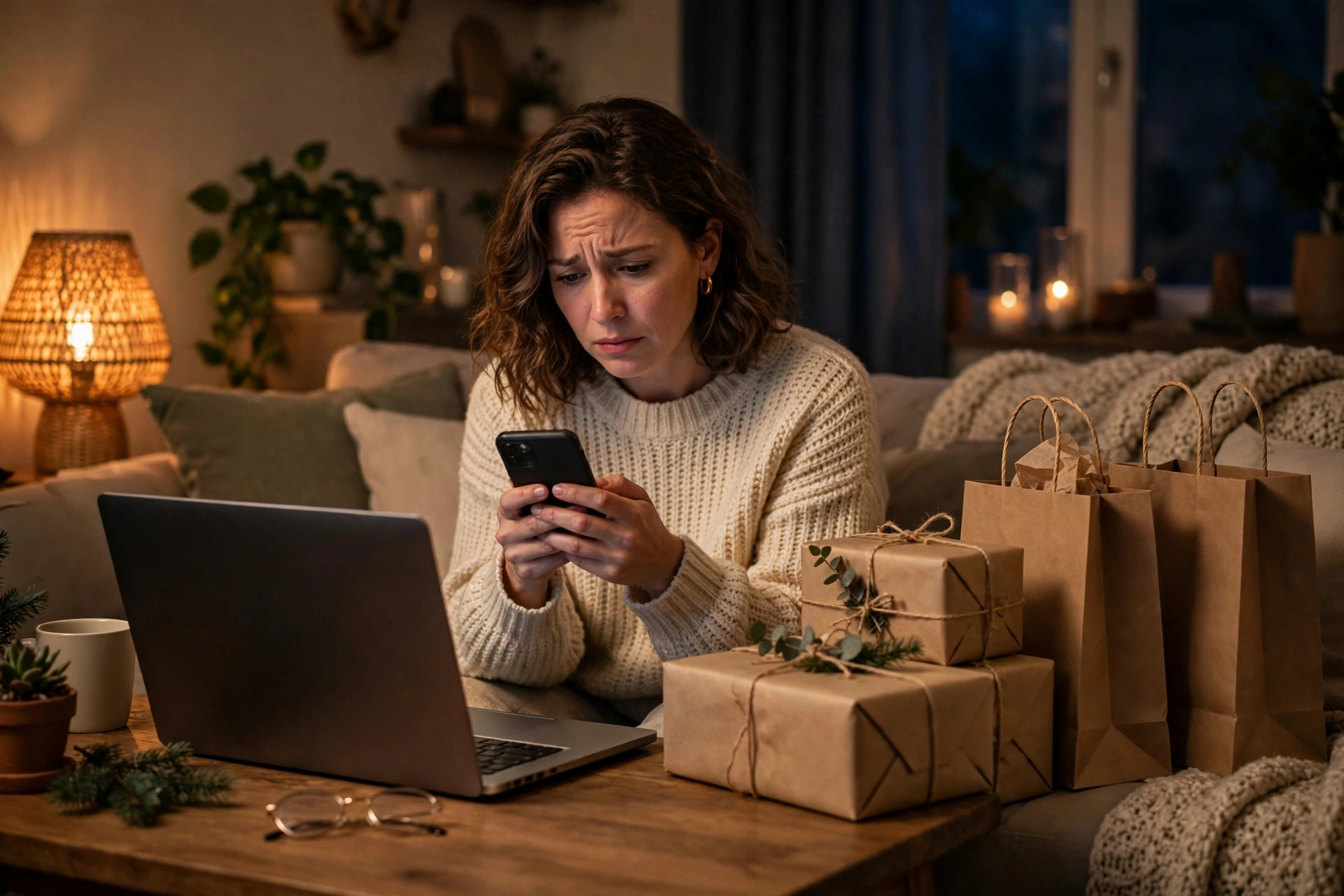
In the first six months of 2026 alone, Americans reported losing $154.1 million to fraudsters who got paid through gift cards and reloadable cards, according to Federal Trade Commission data reported in October 2026. That is not a full-year number. That is half a year, one payment method, and the holidays had not even started yet.
Here is why that number should change how you shop this year. American households plan to spend an average of $1,654 on the holidays in 2026, according to Deloitte’s survey of about 4,000 consumers. Every dollar of that is a target now, because scammers do not need to break into your house anymore. They just need you tired, rushed, and one click away from a checkout page at 11 pm. The busier December gets, the easier you are to fool — and that is exactly when the fake stores, fake delivery texts, and fake charities come out in force.
Here is the part nobody tells you: you do not need to become a cybersecurity expert to keep your Christmas budget safe. You need one rule and seven checks. The rule is the Payment Test: if a seller will not take a credit card, they do not get your money. Credit cards give you a way to dispute a charge. Gift cards, wires, crypto, and payment-app transfers to strangers mostly do not. Learn the seven, then send this to your family — the person most likely to fall for number four is not you.
1. The fake store that only exists until your money clears
This is the most reported scam type in America right now. The Better Business Bureau’s 2025 Scam Tracker report found online purchase scams were the most reported kind of scam — and the holiday version is brutally simple. You see an ad for the exact thing you have been searching for, at a price that makes you stop scrolling. A sold-out toy, a brand-name coat, a gadget everyone wants, 60% off. The website looks real. The photos are stolen from the real brand. The reviews are invented. You pay, you get a confirmation email, and then nothing ever arrives.
The check takes thirty seconds: before you pay, search the store’s name plus the word “scam” and look for any history at all. A real store leaves footprints — reviews on independent sites, a physical address, a phone number someone answers. A fake store has a website and an ad and nothing else. Then look at how they want to be paid. A checkout that steers you toward Zelle, a wire transfer, or crypto is not a quirky small business. It is a trap with no refund button. Pay by credit card, on a site you typed yourself, and you keep your dispute rights — a habit worth building before our Black Friday budget season peaks.
2. The delivery text that is not from UPS, FedEx, or USPS
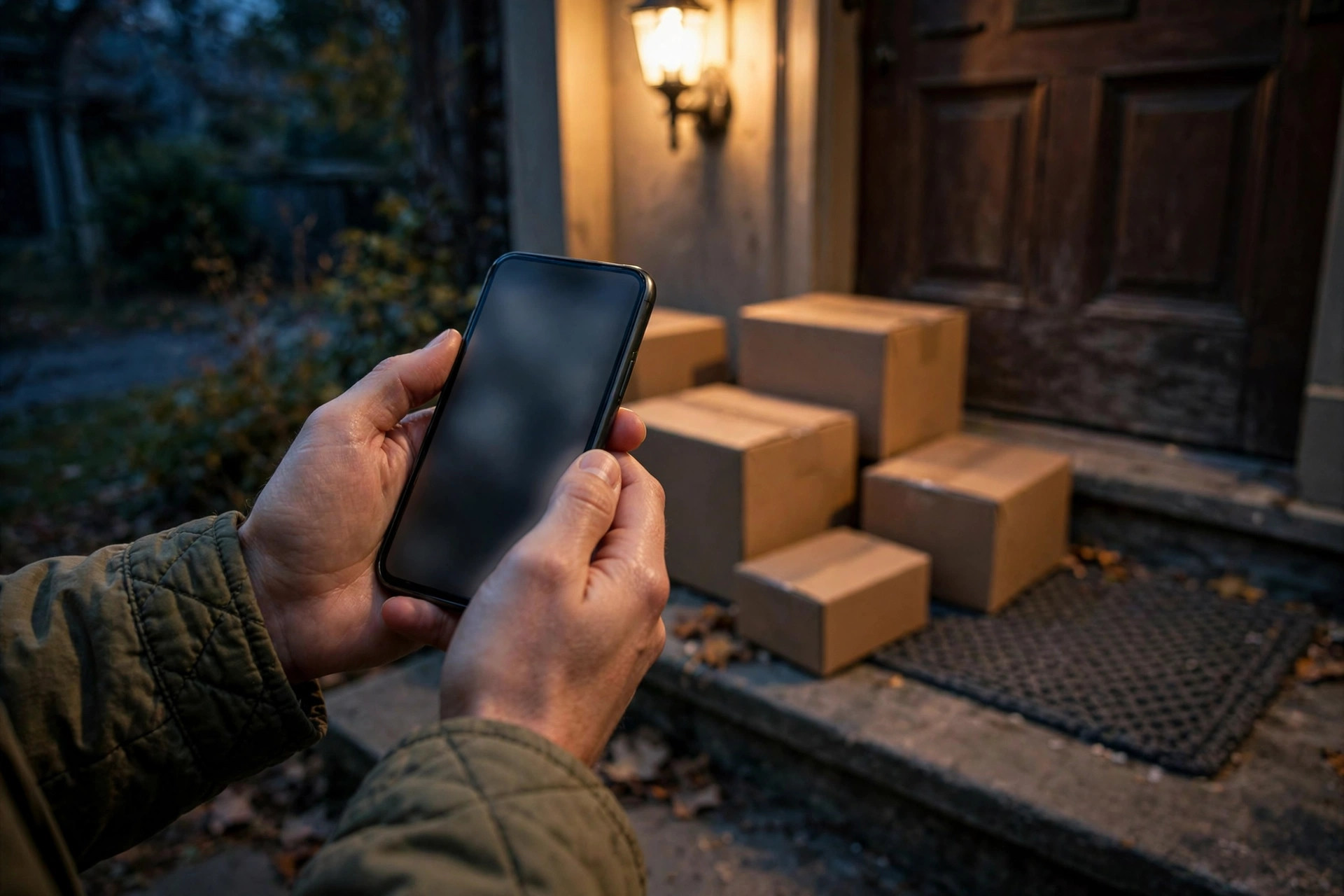
You will get this one in November, guaranteed, because you will actually be waiting for packages. The text says your delivery failed, or your address needs confirming, or a small redelivery fee is due — usually a dollar or two. There is a link. The link is the whole scam. Click it and you land on a cloned tracking page that asks for your card details or installs malware on your phone. The fee is bait. Your card number is the catch.
Here is the tell that never fails: real carriers do not text you out of nowhere asking you to pay a fee through a link. If a message claims a delivery problem, do not touch the link. Open the carrier’s own app, or type the carrier’s address yourself, and check the tracking number there. If there is a real problem, it will show up in the real system. If there is not, you just dodged the scam that spikes every year between early October and January, when five genuine tracking messages a day make one fake one look routine. When in doubt, go to the source yourself. Never follow a stranger’s link to get there.

3. The gift card that is empty before you even give it
Gift card draining is the quietest scam on this list because the victim does everything right. You buy a gift card off a store rack, load it with $50, wrap it up, and hand it to someone you love. They try to use it and find $0. What happened is this: a criminal copied the card’s number and PIN while it sat on the rack, resealed the packaging so it looked untouched, and waited. The moment you loaded the card, software spent the balance. You bought an empty envelope with a bow on it.
The check happens in the store, before you reach the till. Is the packaging re-glued, bubbled, or torn? Is the PIN cover already scratched, or is there a sticker over the barcode that should not be there? If anything looks even slightly off, put it back and take a different card. Better still, buy gift cards from behind the counter, or buy a digital card directly from the retailer’s own website. And keep the receipt until the card is spent — it is your only proof of the load if the balance vanishes.
4. The “boss” who texts you to buy gift cards right now
This one does not target your wallet. It targets your good manners. The message arrives during work hours, supposedly from your boss or a company executive: “Can you do me a favor? I am in a meeting and I need gift cards for clients. Buy six $100 cards, scratch off the backs, and text me the numbers.” It feels urgent, it feels important, and it feels rude to question. That is the entire design. In December the same message wears a holiday costume — gift cards for staff, for clients, for a charity drive — but the ask never changes: buy the cards, send the numbers, do it now.
Stop and read this sentence twice, because it is the single most useful line in this article: no real business, and no real government agency, will ever tell you to pay them with a gift card. The Federal Trade Commission says it in exactly those words, and it repeated the warning again in 2026. A boss who needs gift cards for clients does not need them bought by text message in the next twenty minutes. The check is one phone call, to a number you already have — not the number in the message. Call your boss on their real number, or walk to their office, and ask. The answer will always be that they never sent it. And if you work somewhere with older staff or new hires, warn them about this one by name, because politeness is what makes it work.
5. The charity that only exists in December
Giving season is the one time of year when generosity outruns skepticism, and fake charities know it. The email or social media post shows a heartbreaking photo, a name that sounds almost like a charity you know, and a donate button. Sometimes there is a phone call, or a knock at the door, with a story about local kids or disaster victims. You give $50 feeling good about yourself. The money goes to a criminal, and the kids in the photo never existed.
The check is boring, and that is why it works: before you give, search the charity’s exact name plus the word “scam,” and check whether it is a real registered nonprofit. Real charities take money in plenty of ways — card, check, their own website. A charity that insists on gift cards, a wire, crypto, or cash only is not a charity. It is a payment method wearing a halo. Also watch for the near-miss name: a fake charity often borrows the name of a famous one and changes one word, counting on you to skim past it. If you want to give, pick the charity yourself, type its address yourself, and give on its own site.
6. The marketplace deal that is too good to be true
This is the scam that gets smart shoppers, because it does not look like a scam at all. A marketplace listing for a phone, a console, or a designer bag at a price well below every other seller. The seller has a story — moving house, need it gone today, bought the wrong one. The photos look great because they are stolen. Then comes the pivot: “I can do it cheaper if we move off the platform,” or “just pay me directly and I will ship it today.” You pay outside the marketplace, the listing vanishes, and you have no buyer protection, no dispute process, and no seller to find.
The Payment Test kills this one instantly. Inside a marketplace, with a credit card, you have protection. Outside it, paying a stranger directly, you have a story you will tell at family dinners for years. The FBI’s 2025 crime report logged 56,478 complaints about goods that were paid for and never arrived, with $503 million in reported losses — and those are only the people who bothered to report. Before you buy from an unfamiliar seller, check the basics: how long has the account existed, do the same photos appear under other names, does the price make any sense next to every other listing? A genuine bargain is a little cheaper than the rest. A scam is dramatically cheaper than all of them, because the seller is not selling a product. They are selling your trust, and the discount is the bait.
7. The “free gift card” and the locked account
Two messages, one trap. The first promises you a free $100 gift card if you click and fill in a short survey — the survey harvests your personal details, or the link installs malware. The second says your account is locked, your payment failed, or your points are about to expire, and you must log in through the link to fix it. Both work on the same reflex: act now, think later. During the holidays, when you are juggling orders, returns, and a dozen delivery emails, that reflex is already half-triggered before you read the message.
The check is the same for both, and it is a habit worth building for the whole year: never log in, pay, or “verify” anything from a link in a message you did not expect. If a retailer or your bank really needs you, the message will still be there when you open their app yourself or type their address yourself. Check the sender properly too — scammers can name themselves anything, and a message from “Amazon” is not from Amazon just because it says so. Look at the actual address it came from, the actual link it points to, and the tiny misspellings a real company would never ship. And turn on two-factor authentication on your shopping and email accounts before December. If a scammer does get your password, that second code is the door that stays shut.
The 30-second check, all in one place
If you remember nothing else, remember this sequence before you click, pay, or send anything this holiday season. Stop: the message made you feel rushed, worried, or excited, and that feeling is the weapon. Check: verify it through a route you found yourself — the official app, the number you already have, the address you typed. Protect: never hand over a gift card number, a one-time code, your password, or a payment to a stranger’s instructions. That is it. Stop, check, protect. Teach it to your kids before they start online shopping, and teach it to your parents before someone calls them about a package they never ordered.
One more habit: pay for holiday shopping on one credit card, and set an alert at 80% of your holiday budget. That keeps your total visible in one place, which is how our Christmas budget guide keeps spending honest, and it means a fraudulent charge shows up fast, on a card with dispute protection. If a charge you do not recognise appears, call the issuer immediately.
If you already paid a scammer, do this in the first hour
First, do not feel stupid. In 2025 Americans filed three million fraud reports and lost $15.9 billion, according to the FTC’s testimony to Congress in March 2026. You are not the exception. You are the target market, and the people running these scams do it full-time. Shame is the scammer’s second payday, because it stops people reporting, and reporting is what gets money back.
Second, act in this order. If you paid by credit card, call your card issuer right away and dispute the charge — this is the one payment method built for this moment, and if a balance does linger, watch out for the minimum-payment trap. If you paid by debit card, call your bank immediately — protections are weaker. If you sent gift card numbers, call the card company at once — recovery is unlikely once spent, but speed is your only chance. If you wired money or sent crypto, call your bank or exchange immediately, then report it anyway. Third, report it: at ReportFraud.ftc.gov and at ic3.gov, the FBI’s crime complaint center. Keep every screenshot, receipt, message, and tracking number.
The takeaway
Your Christmas budget took you all year to build, in small decisions and skipped takeaways and a sinking fund you actually stuck to. Do not hand it to a stranger in a text message. The Payment Test — if they will not take a credit card, they do not get your money — plus the thirty-second stop-check-protect habit, covers nearly every scam on this list. Use them, teach them to your family tonight, and then go enjoy the holidays you budgeted for. The best gift you can give your January self is a December with no fraud claim, no drained gift card, and no package that never arrives.