Budgeting apps don’t stick for a lot of people. Spreadsheets? Same story — fill one out on a Sunday night feeling very responsible, then never open it again.
If you’re the kind of person who watches money evaporate from a checking account without ever feeling it leave, the envelope system was basically built for you. It’s old — your-grandmother old — and it still works for one reason no app has managed to copy: holding actual cash and watching it disappear hurts. That little sting every time you hand over a twenty? That’s not a side effect. That IS the system.
How It Actually Works
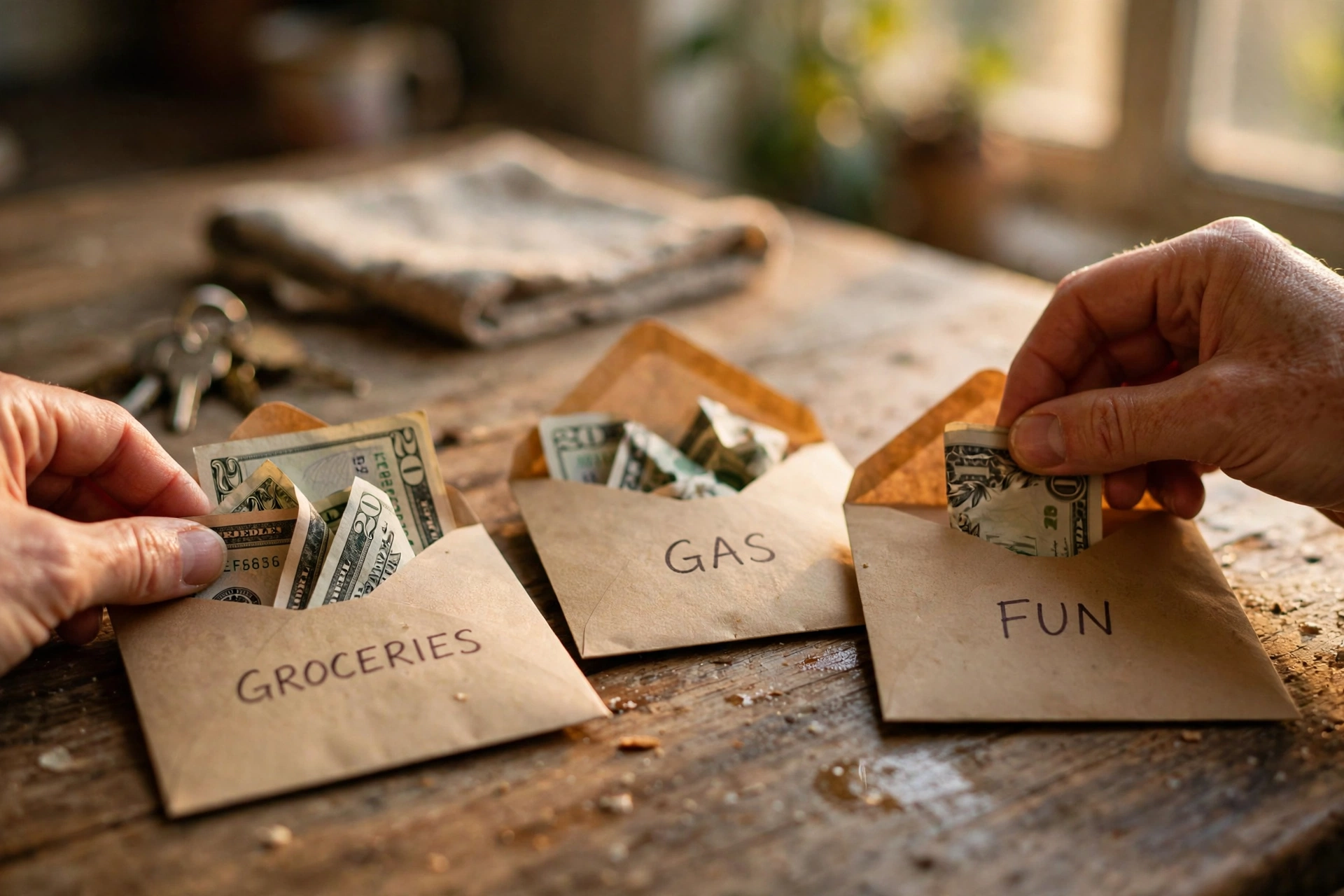
You take your monthly spending money — in cash — and divide it into envelopes. One envelope per category: groceries, gas, eating out, fun money, whatever your money tends to leak into.
Then comes the one rule that matters: when an envelope is empty, you’re done spending in that category until next month. No borrowing from groceries to cover takeout. No “I’ll pay myself back on Friday.” Empty means empty. The envelope is the boss now, not you.
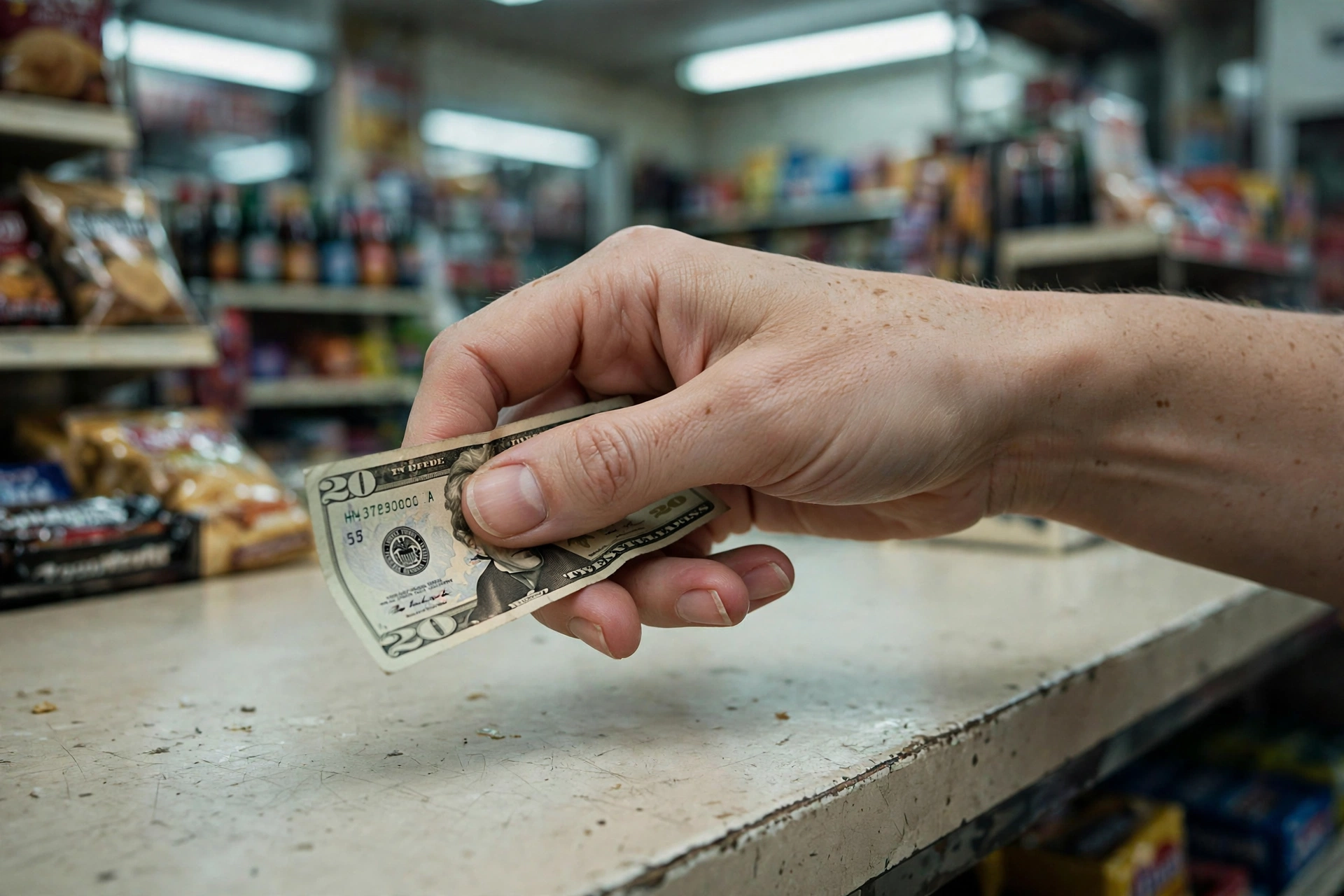
Why does cash work when apps don’t? Researchers call it the “pain of paying,” and it’s real. Tapping a card is painless — that’s exactly the problem. But pulling a $20 out of an envelope with GROCERIES written on it in marker makes your brain do math it never bothers with otherwise. You’ll put stuff back on the shelf. That’s not willpower. That’s the system doing the heavy lifting for you.
What You Need (Short List)
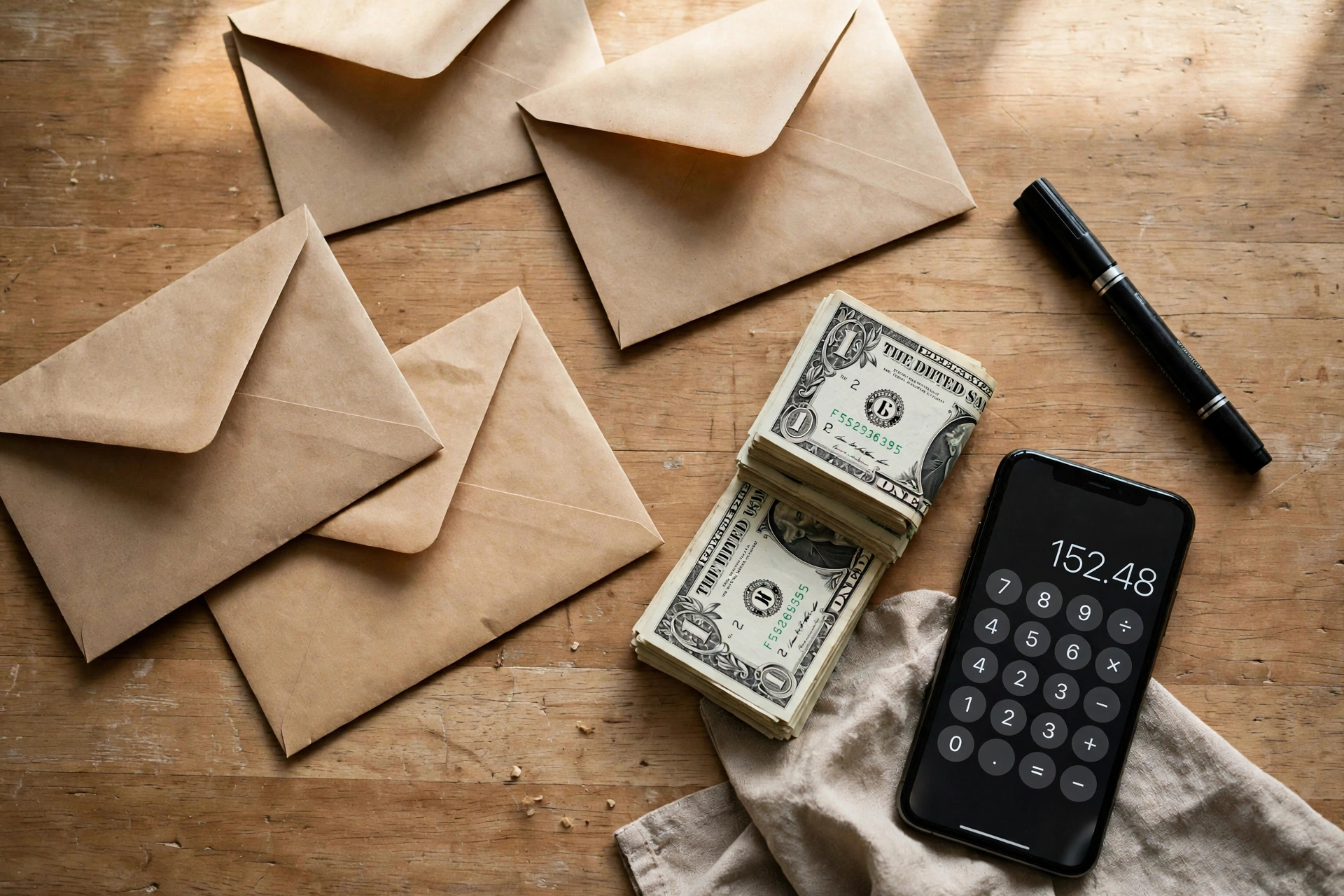
- Envelopes — plain paper ones work fine, or a reusable cash envelope wallet (around $10–15 online). Don’t overthink this.
- Your categories and amounts — decided before the month starts, not mid-month when you’re already rationalizing.
- One ATM trip per payday — that’s it.
And here’s what does NOT go in envelopes: rent, car insurance, your phone bill. Anything fixed stays on autopay where it belongs. Envelopes are for the squishy spending — the categories where your money actually disappears: groceries, gas, eating out, clothes, fun.
A Real Example: $3,000 a Month

Enough theory. Let’s say you bring home $3,000 a month after taxes. Fixed bills — rent, insurance, phone, loan payment — eat $1,700 on autopay. That leaves $1,300 of real, touchable envelope money:
| Envelope | Monthly amount | What it covers |
|---|---|---|
| Groceries | $400 | Supermarket only — no dining out |
| Gas / transport | $180 | Fuel and the occasional rideshare |
| Eating out | $120 | Restaurants, coffee, takeout |
| Personal / fun | $150 | Clothes, hobbies, entertainment |
| Household | $100 | Cleaning supplies, small home stuff |
| Buffer / savings | $350 | Straight to savings — not spent |
Total: $1,300. Every dollar has a job before the month even starts.
How the month actually plays out

- Week 1: $95 on groceries. $305 left. Feels easy — almost suspiciously easy.
- Week 2: Another $110 on groceries, $45 on gas. You check the envelopes. Still on track.
- Week 3: Friday night, you’re craving takeout. You open the eating-out envelope: $20 left. You stare at it for a minute… then you cook. This is the system working. It’s not fun in the moment. It’s effective.
- Week 4: Groceries have $40 left and five days to go. Rice, beans, frozen vegetables — you get creative. You end the month with $25 unspent, which slides straight into savings.
That end-of-month shuffle is honestly the best part. Leftover envelope money rolls into savings, and even $50 a month in leftovers is $600 a year you wouldn’t have had otherwise.
The rules that make it work
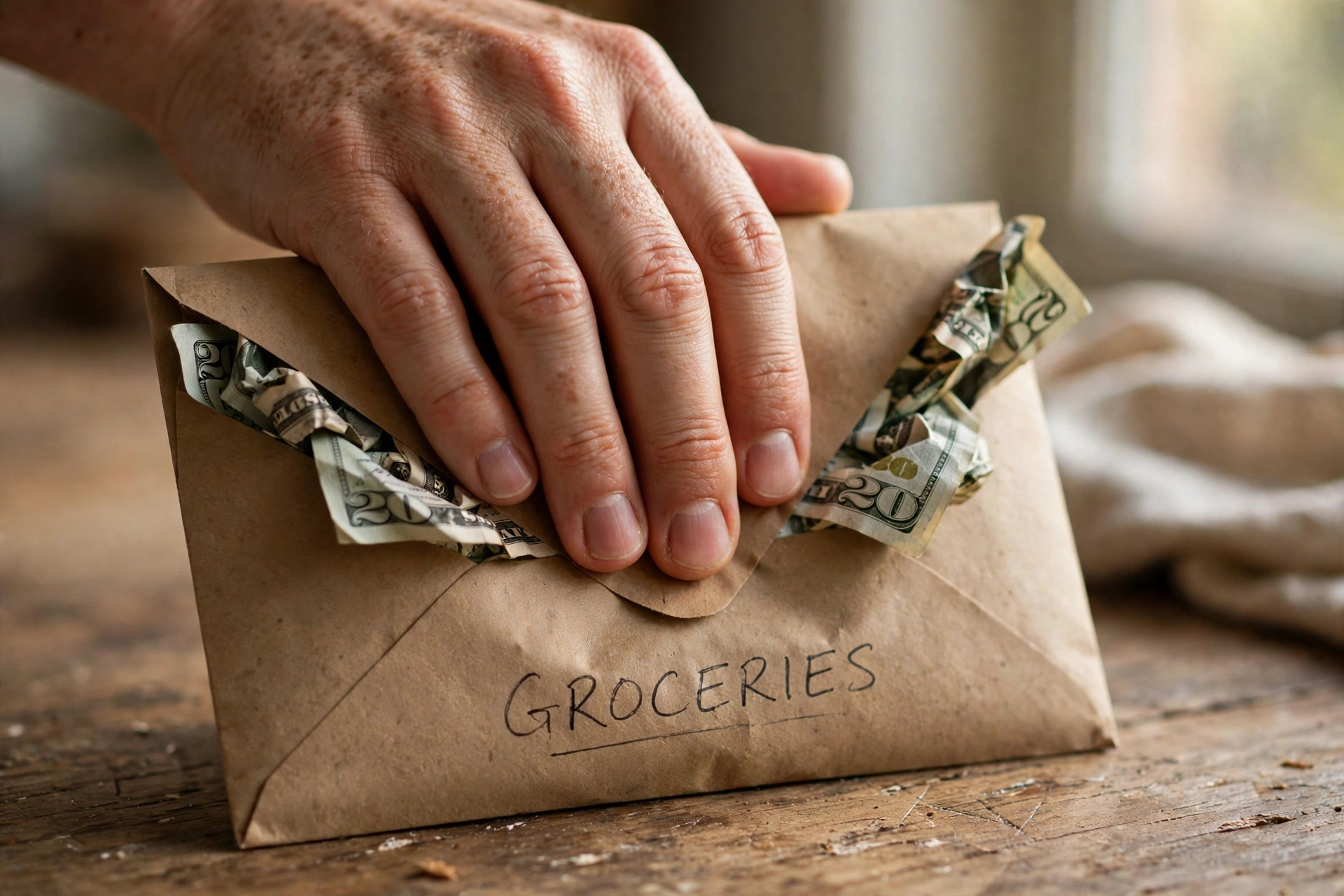
- Never borrow between envelopes. The second you move $20 from groceries to eating out, you’ve taught your brain the limits are negotiable. They’re not.
- An empty envelope is information, not failure. It means the amount was wrong or the spending was. Adjust next month — don’t rescue it this month.
- Don’t carry all your envelopes at once. Take what you need for the day’s errands. Losing $1,300 in cash would ruin your whole month.
Hate Cash? There’s a Digital Version
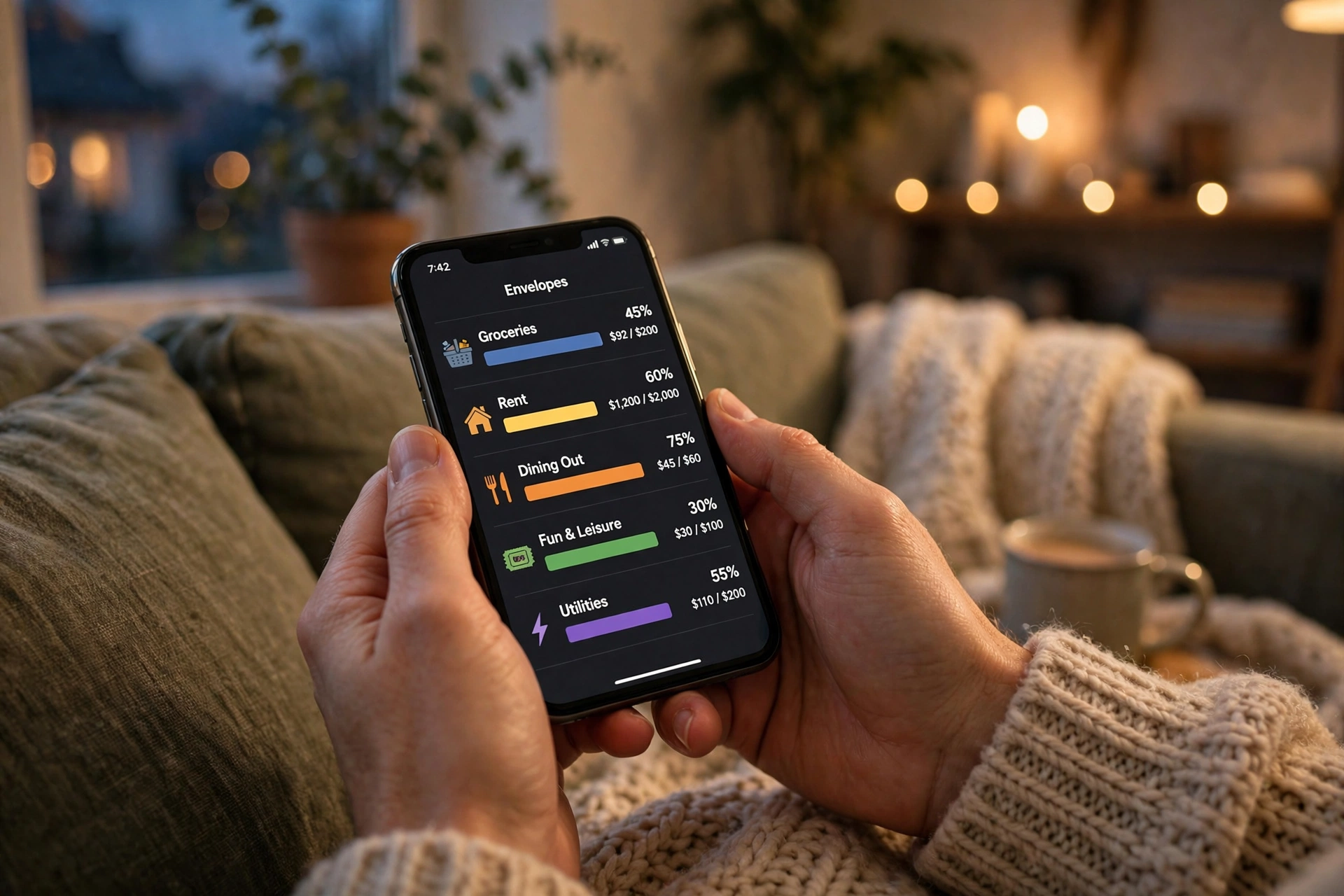
Look, I’ll be straight with you: carrying cash everywhere isn’t for everyone, and in 2026 a scary amount of spending happens online anyway. The good news is the exact same system runs fine on your phone.
Digital envelopes work the same way — every dollar gets a “job,” and when you spend, you assign it to an envelope and watch the balance drop. Same psychology, less paper.
Goodbudget is the honest starting point: it’s literally built as a digital envelope system, and the free plan covers 10 envelopes — more than enough to start as a beginner. Start here. It’s free.
YNAB (You Need A Budget) is the gold standard if you get serious — it forces you to assign every dollar the moment it arrives, exactly like stuffing envelopes. But it’s $109 a year, which stings when you’re budgeting because money is tight. There’s a 34-day free trial; use it to learn the system, then decide.
EveryDollar (Dave Ramsey’s app) has a decent free version — simpler than YNAB, good if you want the envelope idea without a learning curve.
So… cash or digital?
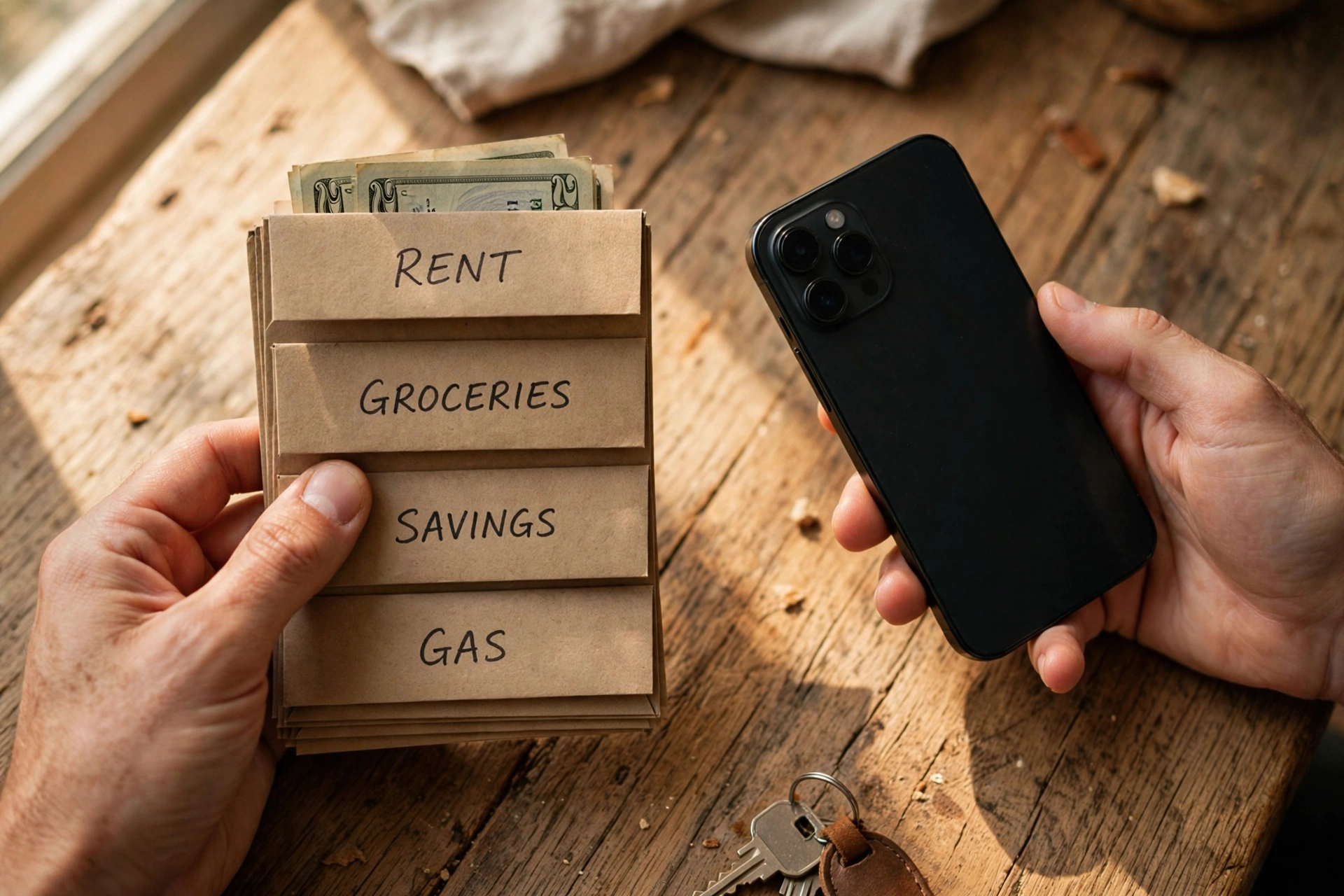
- Cash, if cards are your kryptonite and you need maximum friction between you and your money.
- Digital, if you shop online a lot or the thought of carrying cash stresses you out.
- Hybrid — and honestly this is what most people end up doing — cash envelopes for your problem categories (groceries, eating out), digital for everything else.
There’s no wrong answer here. The best system is the one you’ll still be using a month from now.
Mistakes That Kill It in Week One

Too many envelopes. Start with 5 to 7. People often make 20 envelopes on day one like they’re running a small business — they’re usually the ones who quit by week two. Keep it simple.
Fantasy amounts. If you actually spend $500 on groceries, stuffing $300 in the envelope doesn’t make you disciplined — it guarantees you’ll fail and feel bad about it. Track your real spending for one month first, then set amounts from real numbers. Be honest or don’t bother.
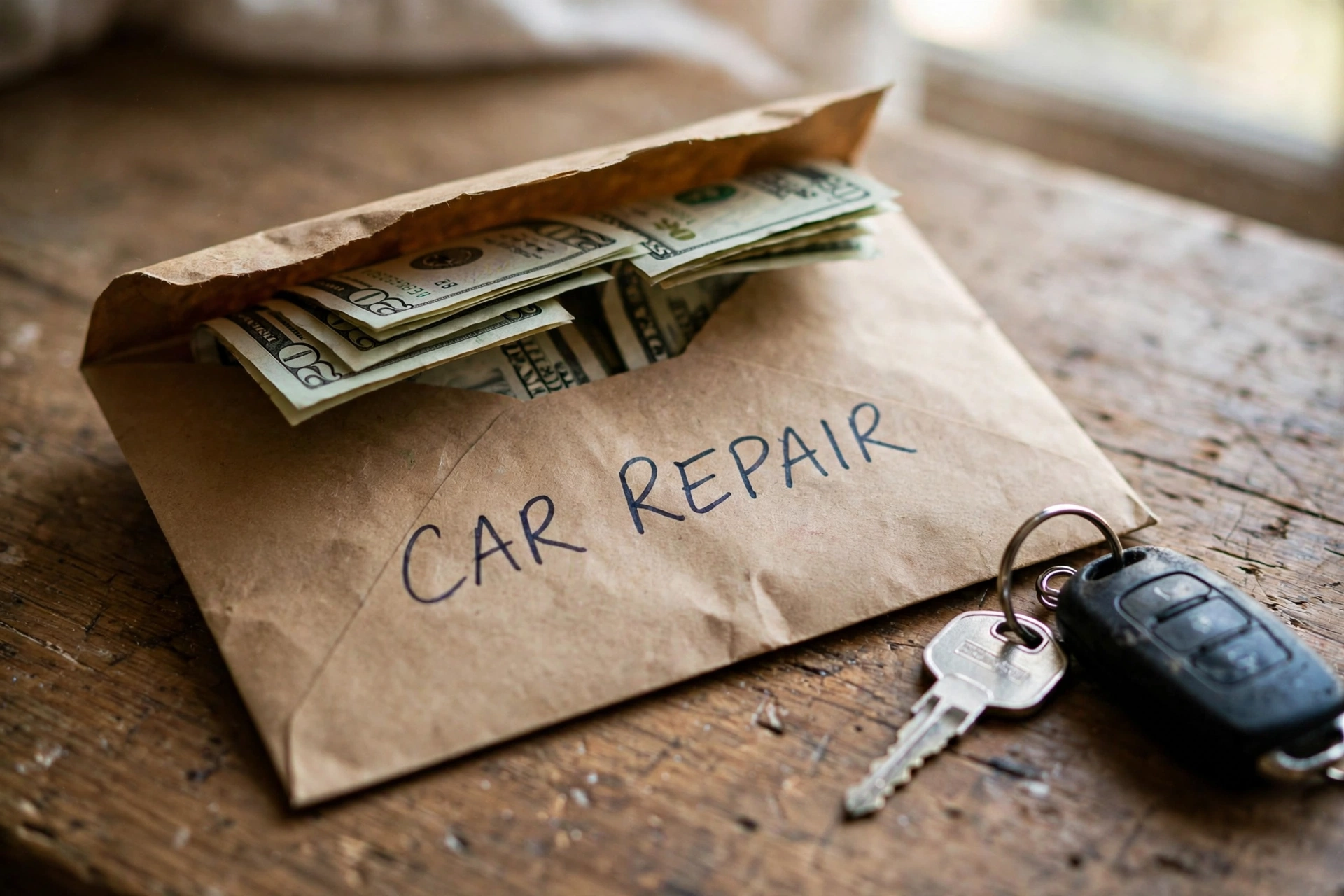
Forgetting the irregular stuff. Haircuts, car registration, holiday gifts — they don’t show up monthly, but they show up. Add a “sinking fund” envelope: $50 a month set aside covers a $600 surprise once a year without wrecking a month.
Quitting after one bad month. Here’s the truth nobody puts in the Instagram version: the first month is calibration, not a test. Almost everyone blows at least one envelope. That’s the system telling you your numbers were guesses — because they were. Adjust and go again.
Your First 30 Days
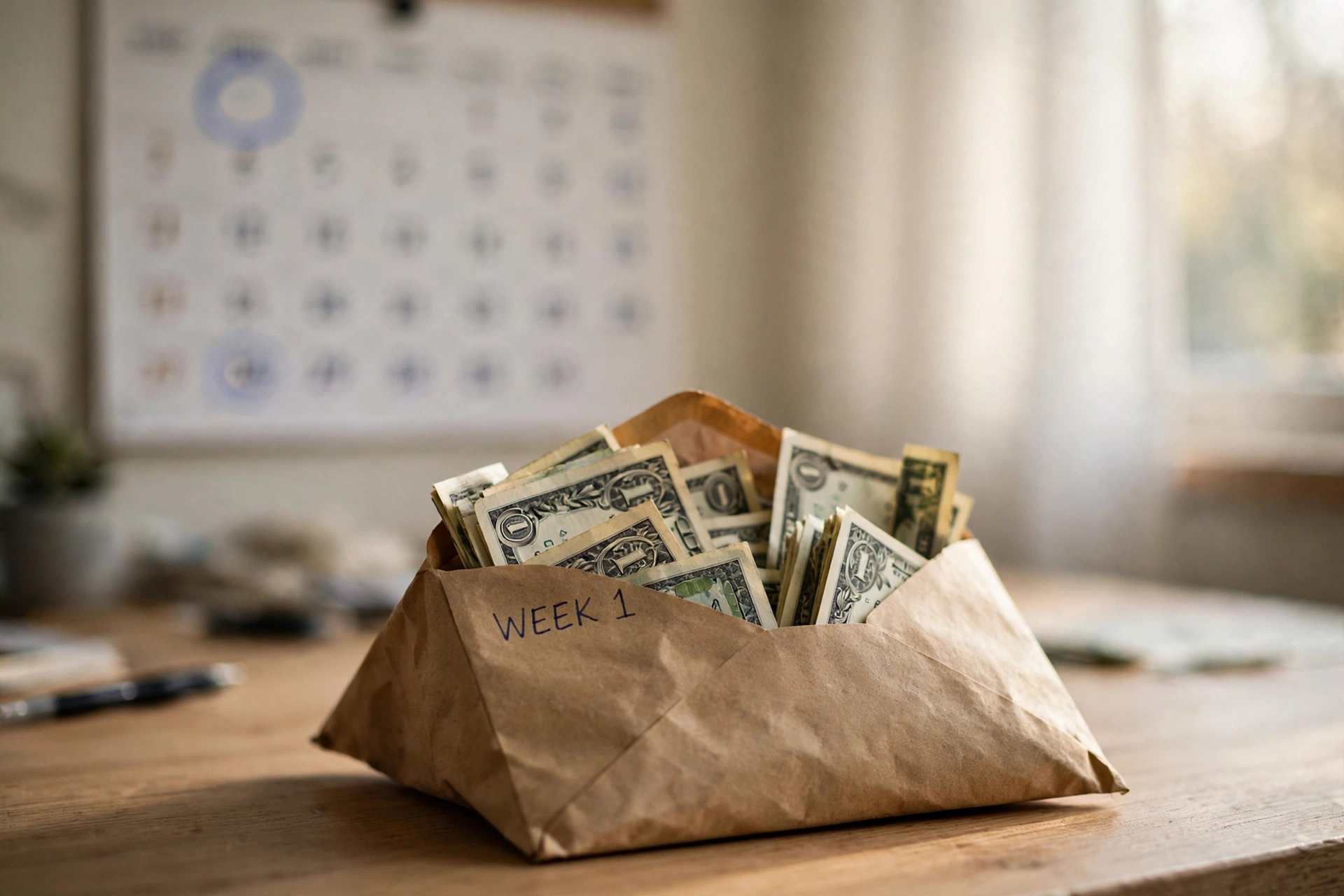
- Week 1: Track every dollar. No envelopes yet — just watch where your money goes. You’ll be surprised, and not in a good way.
- Week 2: Look at the numbers, pick your 5–7 categories with realistic amounts, and get your envelopes (or download Goodbudget).
- Week 3: Withdraw the cash, stuff the envelopes, and start spending only from them. This week feels weird. That’s normal.
- Week 4: Review. Which envelopes died early? Which had leftovers? Adjust the amounts and run it back next month.
The Bottom Line

The envelope system works because it makes your limits impossible to ignore — cash you can feel, or a balance you can see draining. Start with 5 to 7 categories based on what you actually spend, fund them once a month, and let an empty envelope do the saying-no for you.
Grab some envelopes or download Goodbudget’s free plan this week. Run your first envelope month starting on your next payday — and when week three gets uncomfortable, remember: that discomfort is the whole point.